
Jumping is an instinctive way for dogs to greet people at eye level, but it is often an unwelcome behavior that can lead to scratches or accidents. By implementing consistent boundaries and teaching your dog alternative ways to say hello, you can quickly eliminate this habit and create a calmer, more polite canine companion.
Understand Why Your Dog Jumps
Before you can stop the behavior, you must realize why it happens. For most dogs, jumping is a self-rewarding action designed to gain your attention. When your dog jumps, they are instinctively trying to reach your face to lick you or get a closer look.
If you push them away, yell, or even make direct eye contact, you are unintentionally providing the exact interaction they seek. Even negative attention, such as a stern “no,” is still attention. To change the behavior, you must effectively remove the reward of your focus and replace it with a more desirable action.
Master the “Ignore” Technique
The most effective way to extinguish a behavior is to stop reinforcing it. Whenever your dog jumps on you, you must become as uninteresting as a tree.
- Turn your back completely as soon as the paws leave the ground.
- Cross your arms over your chest to avoid accidentally petting or pushing them.
- Remove all eye contact and do not speak or make noise.
- Wait until all four paws are firmly on the floor.
Once your dog settles and stands quietly, immediately reward them with calm praise or a treat. If they jump again, repeat the process. Consistency is mandatory; if you allow them to jump sometimes but not others, the behavior will be reinforced intermittently, making it much harder to train away.
Teach a Replacement Behavior
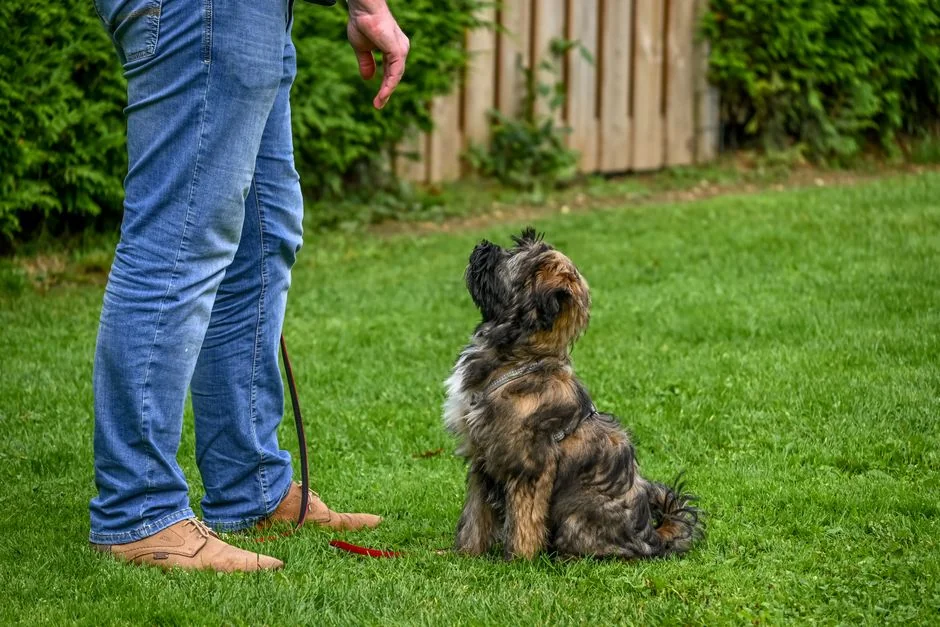
It is easier to teach your dog what to do instead of simply telling them what not to do. Training a strong “sit” is the most effective replacement behavior for jumping.
Use the “Sit to Say Please” Method
Make it a house rule that your dog must sit before they get anything they want, including attention, food, or walks. If you walk through the door and your dog rushes toward you, refrain from greeting them until they sit. If they cannot hold a sit, gently reset them and wait for the voluntary action. When they finally drop their bottom to the floor, offer calm, low-key praise. This teaches your dog that sitting is the exclusive key that “unlocks” human interaction.
Practice with Guests
The biggest challenge for most owners is managing excitement when guests arrive at the door. Your dog likely experiences a spike in arousal, making it difficult for them to remember their training.
- Keep a leash on your dog when you expect visitors. This allows you to maintain control without needing to physically wrestle with them.
- Ask your guest to ignore the dog entirely until they are calm.
- If the guest reaches down to pet a jumping dog, the training session is compromised. Politely explain that you are training your dog to be calm and request their cooperation.
- Keep high-value treats by the door to reinforce the “sit” behavior the moment the guest enters.
Manage the Environment
Training takes time, so you must manage your dog’s environment to prevent “practice” of the unwanted behavior. If you are unable to actively supervise a greeting, prevent the possibility of jumping altogether.
Place your dog behind a baby gate or in a crate when guests arrive if you know your dog is too excited to control their impulses. This ensures that the unwanted behavior is not reinforced by a guest who inadvertently encourages the jumping. Furthermore, provide your dog with plenty of physical exercise and mental enrichment throughout the day. A tired, mentally stimulated dog is significantly less likely to engage in impulsive attention-seeking behaviors like jumping.
Troubleshooting Common Issues
Sometimes, despite your best efforts, you might feel like you are not making progress. This usually happens when the rules are not applied across the board. Every person in your home and every visitor must follow the same protocols. If one household member allows the dog to jump, the dog will continue to try it.
Additionally, ensure your praise is calm. High-pitched, enthusiastic “Good boy!” can sometimes trigger more excitement and lead right back to jumping. Use a calm, low-toned voice when delivering rewards. By keeping the emotional energy in the room low, you reinforce the state of mind you want your dog to maintain. With persistence, you will transition from a jumping dog to one that greets people with polite, four-on-the-floor manners.