
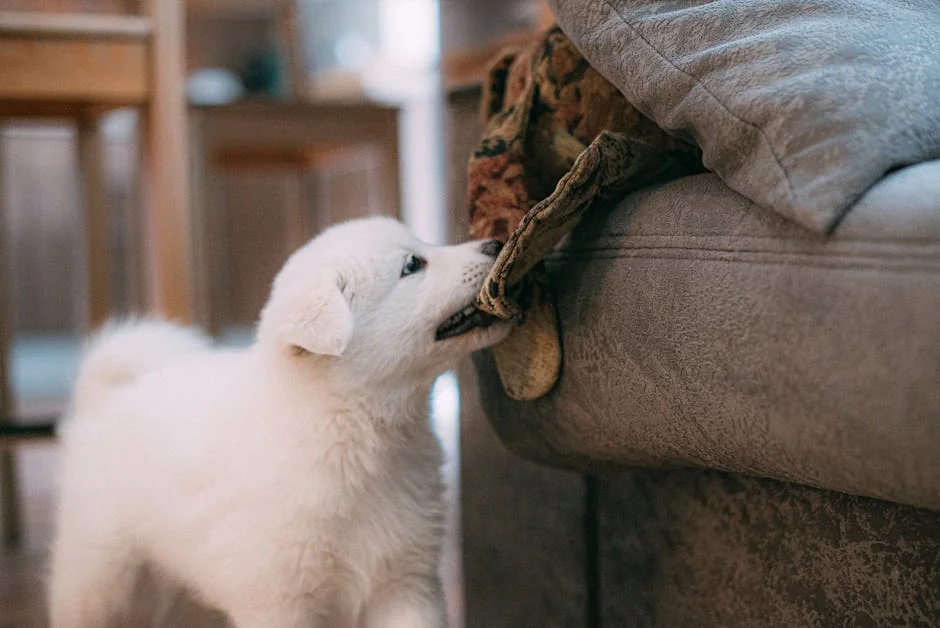
Puppy biting is one of the most frustrating and painful phases of dog ownership, but with the right approach, you can curb this behavior quickly. By implementing a consistent management strategy and teaching bite inhibition, you will transform your hands from chew toys back into tools for affection.
Here is a simple, actionable plan to stop puppy biting fast and teach your dog appropriate manners.
The Three-Step Response System
To stop puppy biting, you must react exactly the same way every time teeth make contact with your skin. Inconsistency confuses the dog. Use this three-step hierarchy whenever your puppy tries to nip you.
1. Redirect to a Toy
Your puppy has a biological need to chew and mouth things. When they start aiming for your hands or ankles, immediately offer an appropriate chew toy.
Keep a rope toy, plush, or rubber chew within arm’s reach at all times. When the puppy opens their mouth to bite you, place the toy in their mouth instead. Wiggle it to make it exciting. If they engage with the toy, praise them calmly. You are showing them what to bite, rather than just telling them what not to bite.
2. Stop All Motion
If redirection fails and the puppy drops the toy to go for your skin again, immediately become boring. Dogs play by movement; when you pull your hands away quickly or dance around to avoid them, you become a giant squeaky toy.
Instead, go stiff. Cross your arms and look up at the ceiling. Do not speak, look at the dog, or move. This is a negative punishment marker that tells the puppy: “Biting makes the fun stop.”
3. The Reverse Time-Out
If the puppy continues to nip at you while you are standing still, you must remove yourself from the situation. Do not grab the puppy to put them in a crate; this can be interpreted as roughness or play.
Instead, step over a baby gate or leave the room and close the door behind you. Stay away for 10 to 20 seconds. Return to the room and act normally. If the biting starts again, leave immediately. Your puppy will quickly learn that biting results in the total loss of their favorite social partner: you.
Teaching Bite Inhibition
Before a puppy stops biting completely, they must learn to control the pressure of their jaw. This is called bite inhibition. If a dog never learns this as a puppy, an accidental bite as an adult can cause serious injury.
When your puppy bites with hard pressure, make a sharp, sudden noise. Some trainers suggest a high-pitched “Ow!” mimicking a littermate. However, for some breeds (like Terriers or working dogs), high-pitched noises sound like prey and may increase excitement.
If “Ow!” excites your dog, use a stern, low-tone marker word like “Too bad” or “Oops,” and immediately withdraw attention. Step away for a few seconds. When you return, resume play. If they bite gently, let play continue. Over time, lower your tolerance threshold until they understand that teeth on skin is never acceptable.
Managing the Environment to Prevent Biting
Training happens in the moment, but management prevents the behavior from happening in the first place. A well-managed puppy bites significantly less.
Enforce Nap Times
The number one cause of excessive, aggressive biting is an overtired puppy. Puppies need 18 to 20 hours of sleep per day. If your puppy has been awake for more than an hour and starts biting frantically, they are not aggressive; they are exhausted.
Do not try to train an overtired puppy. Put them in their crate or pen for a nap immediately. They will likely fall asleep within minutes, and they will wake up with better impulse control.
Increase Mental Stimulation
A bored puppy looks for entertainment, and your moving hands are highly entertaining. Physical exercise is important, but mental work tires a puppy out faster and reduces nipping.
Feed your puppy out of puzzle toys, slow feeders, or by scattering kibble in the grass. Perform short, 5-minute training sessions throughout the day. When a puppy’s brain is tired, their mouth tends to be much quieter.
Mistakes That Make Biting Worse
Even with the best intentions, you might be accidentally encouraging the behavior you want to stop. Avoid these common pitfalls to ensure your plan succeeds.
Avoid Rough Play with Hands
Never use your hands to wrestle with your puppy or tease them around the face. This teaches them that hands are toys. Always use a toy as an intermediary during play. If you want to pet your dog, do so calmly and slowly.
Do Not Yell or Scold
Yelling “No!” or pushing the puppy away often backfires. To a puppy, you are barking along with them or engaging in rough wrestling. It increases their arousal levels, which increases biting. Silence and withdrawal is a far more powerful tool than noise.
Never Use Physical Punishment
holding a puppy’s mouth shut, tapping their nose, or rolling them over does not “show them who is boss.” It creates fear and can turn playful nipping into defensive aggression. You want your puppy to stop biting because they want to keep playing with you, not because they are afraid of your hands.
Handling the “Zoomies”
Most puppies have a “witching hour,” usually in the early morning or evening, where they sprint around and bite everything in sight. During these episodes, your puppy is in a state of high arousal and cannot learn.
Do not attempt to train during the zoomies. Your goal is simply bite management. Toss treats on the floor to engage their nose (sniffing is calming) or place them in a safe, puppy-proofed area with a bully stick or stuffed Kong until the adrenaline spike passes. Once they are calm, you can resume normal interaction.