
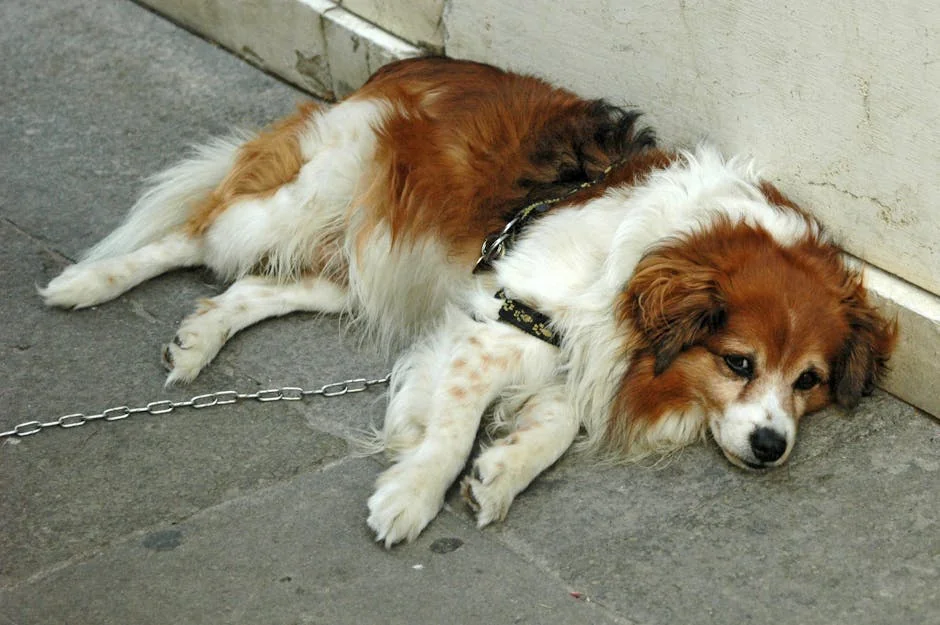
Dogs communicate primarily through body language, but many of their signals are subtle and easily misinterpreted by humans. While a growl or a tucked tail is obvious, early indicators of anxiety are often dismissed as quirks or normal behavior. Recognizing these signs early allows you to advocate for your dog and remove them from uncomfortable situations before they feel the need to react defensively.
Here are ten subtle behavior changes indicating your dog is secretly stressed, along with how to identify them.
1. The “Whale Eye” (Half-Moon Eye)
One of the most telling indicators of canine anxiety is the appearance of the sclera, or the white part of the eye. If your dog turns their head away from a person or object but keeps their eyes fixed on it, you will see a crescent of white at the corner or bottom of the eye.
This is often called “whale eye.” It signals that your dog is feeling threatened and is carefully monitoring a potential danger while wishing to disengage. You might see this when someone hugs a dog that dislikes being restrained or when a child approaches too closely.
2. Excessive Lip Licking and Yawning
Unless your dog has just finished a meal or woken up from a nap, licking and yawning are rarely about hunger or fatigue. In the context of training, play, or social interaction, these are displacement behaviors.
When a dog feels conflicted or nervous, they yawn to release tension. The yawn is usually more intense and longer than a sleepy yawn. Similarly, quick tongue flicks—where the tongue just barely touches the nose—are signs of appeasement. Your dog is trying to tell you or another dog that they come in peace and want the pressure reduced.
3. The Release Shake (The “Shake Off”)
You often see a dog shake their entire body vigorously, exactly as they would when wet, even though they are completely dry. This is a mechanism used to reset their nervous system and physically “shake off” adrenaline following a stressful encounter.
Watch for this after you hug your dog, after a rough play session with another dog, or immediately following a visit to the vet. It is a clear confirmation that the event that just ended was stressful for them.
4. Panting Without Exertion
Panting is how dogs cool down, but it is also a direct physiological response to a cortisol spike. If your dog is panting while the room is cool and they haven’t been exercising, they are likely experiencing anxiety.
Stress panting looks different from heat panting. It is often shallower and more rapid. You may notice their tongue looks “spatulate”—wide at the bottom and curled up at the edges—rather than hanging loosely. This is often accompanied by tension around the mouth and cheeks.
5. Avoidance Behaviors
When dogs are uncomfortable, their first instinct is usually flight or avoidance. If your dog is secretly stressed, they may try to disengage socially.
- Diffused focus: They may sniff the ground intensely. This is often a fake sniff used to avoid eye contact with a stressor (like another dog).
- Turning away: They might turn their head or entire body away from you or a trigger.
- Hiding: Seeking refuge under tables, behind your legs, or in their crate.
If you notice your dog ignoring commands or turning away, they aren’t necessarily being stubborn; they may be overwhelmed and asking for space.
6. SUDDEN Shedding and Dandruff
Stress causes an immediate physical reaction in a dog’s skin and coat. When a dog is acutely stressed, their hair follicles dilate, causing them to shed explicitly more fur than usual. This is commonly seen at veterinary clinics, often referred to as “blowing their coat.”
Simultaneously, you might see sudden shedding of dander (dandruff). If your sleek black dog suddenly looks like they are covered in white dust during a thunderstorm or a car ride, this is a physiological stress response, not a grooming issue.
7. Sweaty Paws
Dogs sweat through their paw pads. Just as humans get clammy hands when nervous, dogs leave wet footprints when anxious. If you notice damp paw prints on the floor or examination table, and your dog hasn’t been walking in water, they are sweating due to high anxiety.
8. Refusing High-Value Treats
For most dogs, food is a primary motivator. A dog that is food-motivated but suddenly refuses a favorite treat is in a state of high emotional arousal.
When the “fight or flight” sympathetic nervous system takes over, the digestive system shuts down. If your dog normally loves cheese but spits it out or ignores it during a walk or training session, the environment is too stimulating or frightening for them to function normally. This is a red flag that you need to increase distance from whatever is worrying them.
9. Hypervigilance or Pacing
A relaxed dog can settle down. A secretly stressed dog often cannot. If your dog is pacing back and forth, unable to choose a spot to lie down, or checking the windows and doors repeatedly, they are feeling unsafe.
This hypervigilance may manifest as an inability to focus on you. Their ears might be swiveling constantly to catch sounds, and they may be startling easily at minor noises.
10. Changes in Ear and Tail Carriage
While a tail tucked between the legs is an obvious sign of fear, subtle changes in carriage are easy to miss.
- Ears: If your dog’s ears are pinned back tightly against their head (the “seal” look), they are worried. Conversely, ears that are rigid and pitched aggressively forward can indicate high arousal and potential reactivity.
- Tail: A tail that is waging does not always mean happy. A slow, stiff wag, particularly one held low or level with the back, can indicate insecurity. A high, vibrating wag can indicate arousal that may tip over into aggression. Look for a loose, wiggly body to confirm happiness; stiffness anywhere implies stress.
How to Help a Stressed Dog
If you identify these signs, your immediate goal is to de-escalate the situation.
- Create Distance: Move your dog away from the person, animal, or object causing the reaction.
- Stop the Interaction: If you are petting or hugging the dog, stop immediately.
- Provide a Safe Space: Allow the dog to retreat to a crate, a mat, or a quiet room.
- Advocate: Tell strangers, “No, he normally loves people, but he is overwhelmed right now. Please don’t pet him.”
By respecting these “secret” signals, you build trust. Your dog learns that you are listening, which ultimately boosts their confidence and reduces their overall anxiety.