
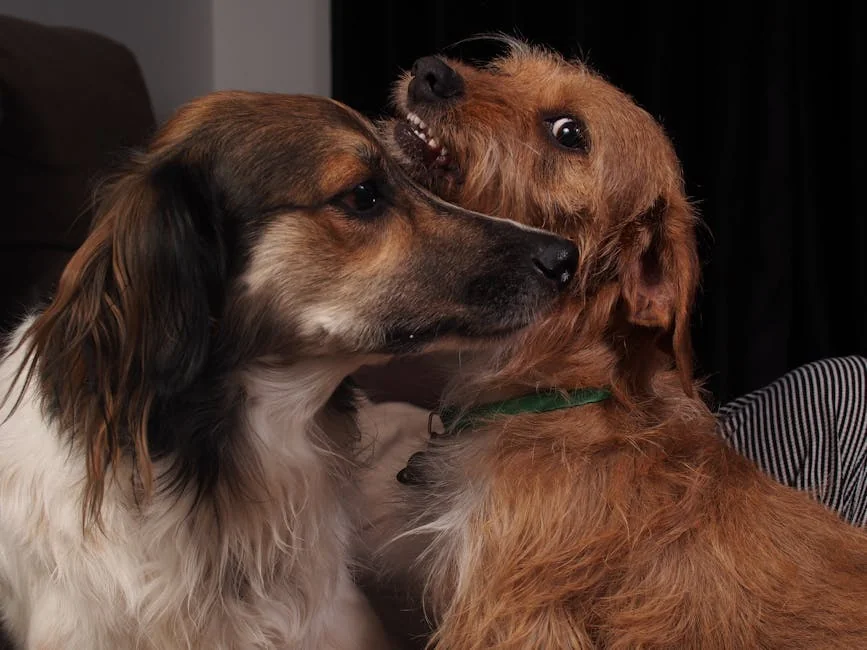
Determining if your dog is truly happy requires looking deeper than a simple tail wag, which can sometimes be a misleading signal. By observing subtle shifts in posture, facial expressions, and daily habits, you can accurately gauge your companion’s emotional state and verify that they are thriving in your care.
Decoding the “Loose” Body Language
The most reliable indicator of canine happiness is the overall fluidity of your dog’s movement. A happy dog is physically relaxed. You should look for a lack of tension in their muscles, particularly along the spine and around the shoulders.
The Full Body Wiggle
When you greet your dog, notice if only the tail moves or if the motion ripples through their entire body. True happiness often manifests as a “loose” wiggle where the rear end and the tail move in sync, sometimes curving the body into a C-shape. If your dog looks like they are wiggling out of their skin with soft, curvy movements, they are expressing genuine joy.
The Relaxed Tail Wag
Contrary to popular belief, a wagging tail does not always equal happiness. A stiff, high-held tail vibrating quickly can signal arousal or even aggression.
For happiness, look for these specific tail signs:
- The Helicopter: A tail rotating in a circle is a distinct sign of happy social engagement.
- The Neutral Sweep: A broad, sweeping wag at a mid-level (neutral) position indicates a relaxed and friendly state.
- Right-Sided Bias: Studies suggest that dogs tend to wag their tails more to the right when they feel positive emotions, while left-sided wags are associated with negative or withdrawal emotions.
Facial Expressions of Joy
Dogs have complex facial musculature that expresses emotion similarly to humans, though the signs can be subtler. You need to look closely at the eyes, mouth, and ears to get the full picture.
The Soft Eye
A happy dog has “soft” eyes. This means the eyelids are relaxed, not pulled back or wide open. You might see them squint slightly, especially when they are being petted or greeted.
If you can see the whites of your dog’s eyes (the sclera) in a crescent shape, this is often a sign of stress or fear, known as “whale eye.” In contrast, a happy gaze is gentle and blinking is frequent.
The “Dog Smile”
When a dog is content, their jaw muscles relax. This often results in the mouth hanging slightly open, with the tongue relaxed and potentially lolling over the teeth. The corners of the mouth (commissures) may turn upward slightly, creating the appearance of a smile.
Pay attention to panting. A happy pant is rhythmic and accompanied by a relaxed face. A stress pant involves the commissures of the mouth being pulled back tight (creating ridges on the cheeks), rapid shallow breathing, and a wide, taut tongue.
Ear Positioning
Ear carriage varies by breed, but generally, ears that are held naturally—neither pinned back tight against the head nor pitched forward in intense alert—indicate a calm mood. Some dogs will hold their ears slightly back and loose when they are in a submissive, friendly greeting mode.
Behavioral Indicators and Engagement
Happiness is not just about how your dog looks, but also what they do. Their daily routine and how they interact with you provide the context for their emotional health.
The Play Bow
One of the most distinct signals of happiness and social intent is the play bow. This is when your dog lowers their front end while keeping their rear end up in the air. This gesture is a universal canine signal that says, “Everything I do next is for fun.” If your dog initiates this with you or other dogs, it is a clear sign of high spirits and a desire to engage.
Healthy Sleep Habits
A truly happy dog is a well-rested dog. Adult dogs typically sleep 12 to 14 hours a day. If your dog settles down easily and sleeps deeply (often twitching or “running” in their sleep), it indicates they feel safe in their environment.
Conversely, a dog that is pacing, constantly vigilant, or unable to settle may be suffering from anxiety or chronic stress, preventing them from achieving restorative rest.
Appetite consistency
While some dogs are picky eaters, a sudden disinterest in food is often the first sign of emotional or physical distress. A happy dog generally looks forward to mealtime and eats with enthusiasm. If your dog accepts high-value traits readily and maintains a steady appetite, it is a good baseline indicator of general well-being.
Assessing Social Contact
How your dog seeks out affection reveals their level of comfort and bonding, which are precursors to happiness.
The “Lean”
Does your dog press their weight against your legs while you are standing or sitting? This “leaning” behavior is a sign of trust and affection. It shows they are comfortable in your personal space and see you as a source of security.
Soliciting Engagement
A depressed or unwell dog will often withdraw and hide. A happy dog will seek you out. This doesn’t mean they need to be velcroed to your side 24/7, but they should check in on you. Bringing you a toy, nudging your hand for pets, or simply choosing to lie down in the same room as you are all actionable clues that your dog is socially satisfied.
Distinguishing Excitement from Happiness
It is crucial for you to understand that high arousal (excitement) is not the same as happiness. A dog jumping frantically, barking incessantly, or mouthing at your hands may be over-stimulated and stressed rather than happy.
True happiness includes an element of emotional stability. A happy dog can go from active play to a calm settle relatively quickly. If your dog seems “manic” and cannot calm down, they may be experiencing hyper-arousal, which feels more like anxiety to a dog than joy. Look for the ability to relax as the ultimate confirmation of a happy, balanced state.