

Teaching your dog specific obedience cues is the single most effective way to ensure their safety and build a bond based on mutual respect. By mastering these essential commands, you provide your dog with the structure they need to navigate the world confidently while giving yourself peace of mind in potentially dangerous situations.
The Foundation: Sit
“Sit” is widely considered the easiest command to teach, but its value goes far beyond a simple party trick. It acts as a universal “please” and an emergency brake for your dog. When your dog is sitting, they cannot jump on guests, bolt out the door, or chase a squirrel.
You should use “Sit” as a transitional behavior. Before you put down the food bowl, open the door for a walk, or throw a ball, clearly ask for a sit. This teaches your dog that calmness and compliance unlock the things they want.
How to Refine It
If your dog already knows how to sit, focus on speed and reliability. A dog that sits slowly in the living room might ignore you at the dog park. Practice this command in new environments with increasing distractions to proof the behavior.
The Safety Net: Come (Recall)

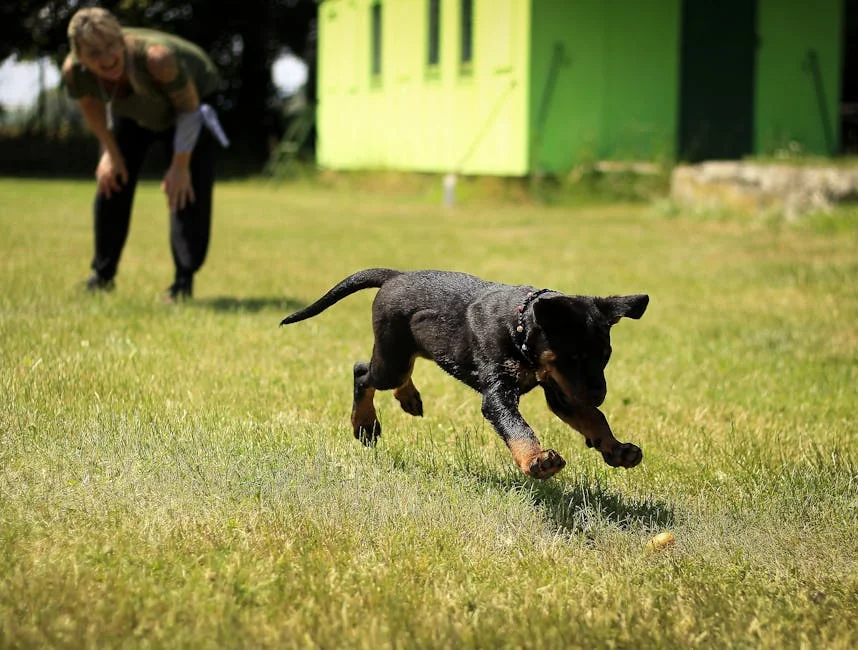
This is arguably the most critical command every dog should learn. A reliable recall can save your dog’s life if they slip their collar near a busy road or encounter an aggressive animal.
The golden rule of recall is to never punish your dog when they come to you, no matter how long it took them to comply. If you call them and then scold them for what they were doing previously, you are punishing the act of returning to you.
Protecting the Command
To keep the “Come” command powerful, follow these guidelines:
- High-Value Rewards: Always use the best treats (like chicken or cheese) for recall training.
- Don’t Poison the Cue: Do not call your dog to you for something unpleasant, like a bath or nail trimming. Go get them instead.
- Start Small: Begin training safely indoors or on a long emotional lead before attempting off-leash scenarios.
Impulse Control: Leave It

“Leave It” tells your dog to ignore an item of interest. This is distinct from “Drop It,” which asks them to relinquish something they already have. “Leave It” is a preventative measure that stops your dog from picking up toxic food on the sidewalk, investigating a dangerous animal, or stealing your dinner.
This command teaches impulse control. It frames the decision as a choice: ignoring the temptation results in a better reward from you.
Practical Application
Practice “Leave It” during walks. If you see a piece of trash or a discarded chicken bone ahead, give the command before your dog reaches for it. When they look away from the item and back at you, reward them heavily. This redirects their focus from the environment back to the handler.
Building Endurance: Stay
“Stay” requires your dog to remain in a specific position until you give a release word, such as “Free” or “Okay.” This command is vital for managing your dog’s behavior when guests arrive or when you need to clean up a broken glass without paws getting in the way.
Many owners confuse “Stay” with “Wait.” Generally, “Wait” is a temporary pause (like waiting to exit a car), while “Stay” is a formal command that implies, “Do not move a muscle until I tell you.”
The Three D’s of Stay
To master this, you must work through the three variables of difficulty:
- Duration: Start by asking your dog to stay for one second, then gradually build up to several minutes.
- Distance: Once they can hold a stay while you are close, start taking one step back, then two. Eventually, you should be able to leave the room.
- Distraction: Practice stays while you bounce a ball, do jumping jacks, or open a door. This tells the dog that “Stay” applies regardless of what is happening around them.
Settling Down: Down

Teching your dog “Down” (to lie down on their belly) serves a different purpose than “Sit.” It is a posture of relaxation. It is difficult for a dog to maintain an anxious or aggressive state while lying down.
This command is particularly useful for public outings, such as visiting a cafe or waiting at the vet’s office. It signals to the dog that they are “off duty” and can relax.
Overcoming Resistance
Some dogs feel vulnerable in the down position. If your dog resists, avoid pushing physically on their hips. Instead, use a lure from their nose to between their front paws, guiding them naturally into the position. Reward the moment their elbows touch the floor.
Passive Control: Heel
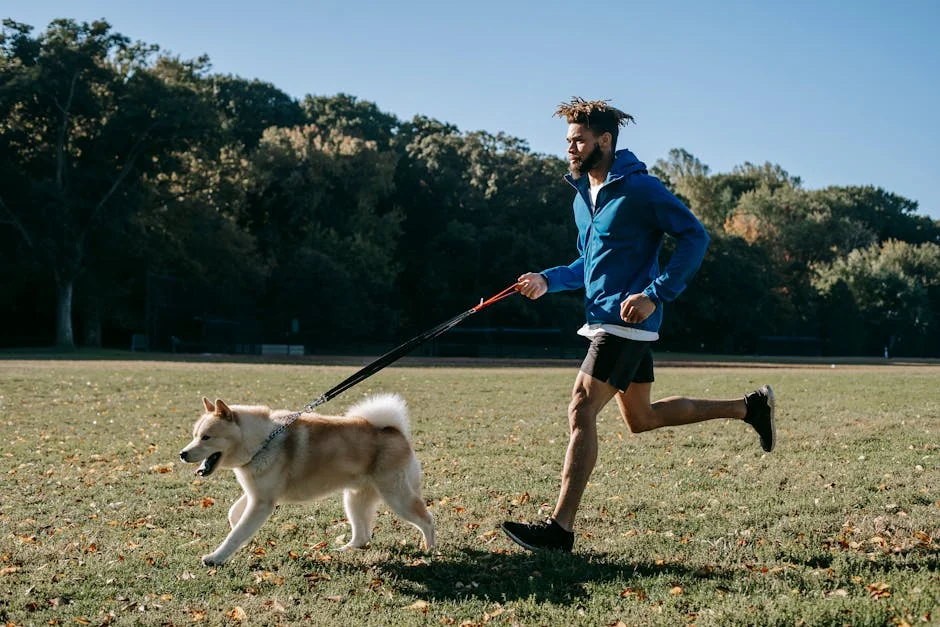
While “Leah Walking” is a general concept, “Heel” is a specific command where the dog walks parallel to your leg, usually on the left side, without pulling. You do not need your dog to heel for an entire 30-minute walk, but they must know how to do it on command.
This is essential for navigating crowded streets, passing other dogs, or walking through automatic doors safely. It engages your dog’s brain and requires them to sync their pace with yours.
Tips for Training Success
Knowing the commands is half the battle; teaching them effectively is the other.
Keep Sessions Short and Positive
Dogs have the learning capacity of a toddler. Train in bursts of 5 to 10 minutes. If you train for too long, your dog will become frustrated or bored. Always end on a high note with a success, even if you have to lower the difficulty to get it.
Consistency is Key
Everyone in your household must use the same words. If you say “Down” but your partner says “Off” when the dog jumps on the couch, the dog will be confused. Agree on a verbal vocabulary and hand signals before you begin.
Fade the Lure
Initial training often involves guiding the dog with a treat in your hand. You must stop doing this as soon as the dog understands the mechanics. If you don’t, the dog will only obey when they see food. Keep the treat in your pocket or pouch, give the command, and produce the reward only after they comply.