
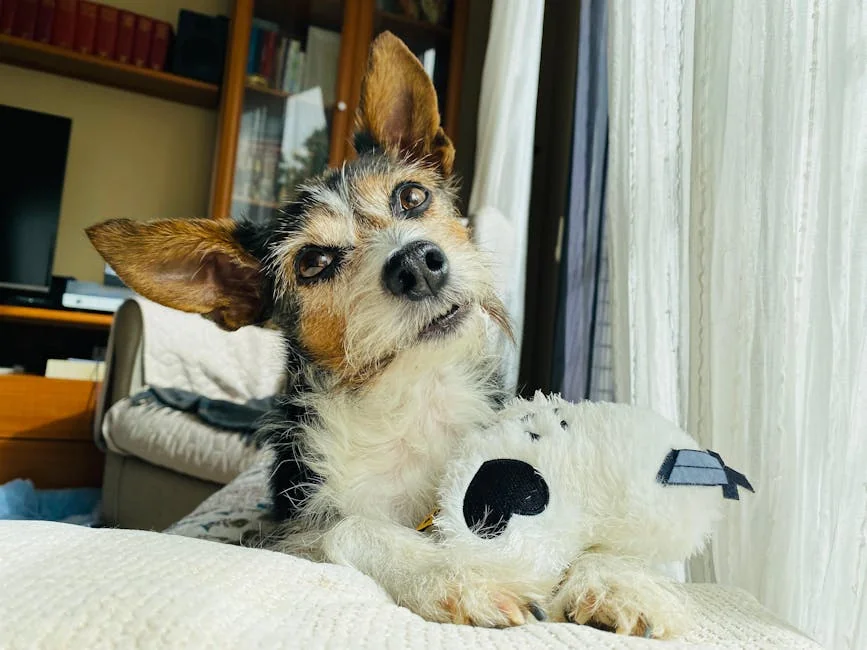
Mental fatigue can be just as exhausting for your dog as physical exercise, helping to curb destructive behaviors like chewing, barking, and restlessness. By incorporating these straightforward, low-cost activities into your daily routine, you can improve your dog’s cognitive health and strengthen your bond without leaving the house.
Utilize Food-Dispensing Enrichment
Feeding your dog meals from a bowl is a missed opportunity for mental exercise. Instead, make your dog work for their sustenance to stimulate their natural foraging instincts.
Use Puzzle Feeders and Snuffle Mats
Puzzle toys require your dog to slide, lift, or rotate components to release hidden kibble. If you are on a budget, a snuffle mat—a fabric mat with long strips of felt—allows you to hide dry food, forcing your dog to use their nose to find every piece. This turns a five-minute meal into a twenty-minute cognitive workout.
Emphasize Frozen Treats
For a longer-lasting activity, stuff a durable rubber toy with a mixture of wet food, plain yogurt, or unsalted peanut butter and freeze it. The effort required to lick and gnaw through the frozen block keeps your dog focused and calm for extended periods, providing a constructive outlet for pent-up energy.
Implement Scent Work Games
A dog’s sense of smell is their primary way of interpreting the world. You can easily facilitate scent work at home by challenging your dog to locate hidden items.
The Shell Game
Take three opaque cups and place a high-value treat under one while your dog watches. Move the cups around slowly and encourage your dog to “find it.” When they nudge the correct cup with their nose or paw, immediately reward them with the treat. This game improves focus and reinforces patience.
Hide and Seek
Ask your dog to “stay” in one room while you hide in another part of the house. Once you are hidden, call your dog’s name once. When they find you, offer heavy praise or a small reward. This game engages their tracking abilities and reinforces your recall commands.
Master Basic Training Intervals
Training is not just about teaching “sit” or “stay”; it is about active communication and problem-solving. Keep your dog’s brain sharp by shifting from physical drills to mental mastery.
Practice Impulse Control
Use commands like “leave it” or “wait” during everyday activities. For example, hold a treat in your closed fist and wait for your dog to stop jumping or mouthing your hand before you open it. This forces your dog to process their desires and choose a calm behavior to achieve their goal.
Introduce Trick Training
Teaching complex tricks, such as “spin,” “roll over,” or “tidy your toys,” requires your dog to learn new motor patterns. Spend 10 minutes a day focused on mastering a single new trick. If your dog already knows the basics, expand to “shaping,” where you reward small, incremental movements that eventually form a final command.
Incorporate Sensory Play
Sometimes, simple changes to your dog’s environment can provide significant mental stimulation without requiring active participation from you.
Create an Indoor Obstacle Course
Use household items like broomsticks, pillows, and chairs to build a gentle agility course. Teach your dog to jump over a low stick, weave between chair legs, or crawl under a blanket. Navigating these obstacles requires spatial awareness and listening skills, as they must follow your guidance to complete the course safely.
Rotate Your Dog’s Toys
Dogs often lose interest in toys that are perpetually left on the floor. To keep their environment fresh, store away 75% of their toys and rotate them every few days. When you reintroduce a “stored” toy, it often captures your dog’s attention as if it were brand new, encouraging independent exploration and play.
Establish a Consistent Schedule
Mental stimulation is most effective when it is predictable. Dedicate specific times of the day—such as before they are left alone or right before bed—to focus on these activities. A tired dog, reached through both movement and mental engagement, is significantly less likely to engage in unwanted behaviors born out of boredom or frustration. Monitor your dog’s fatigue level; if they become frustrated or shut down, simplify the game. The goal is to provide a challenge that they can solve, building their confidence along the way.