
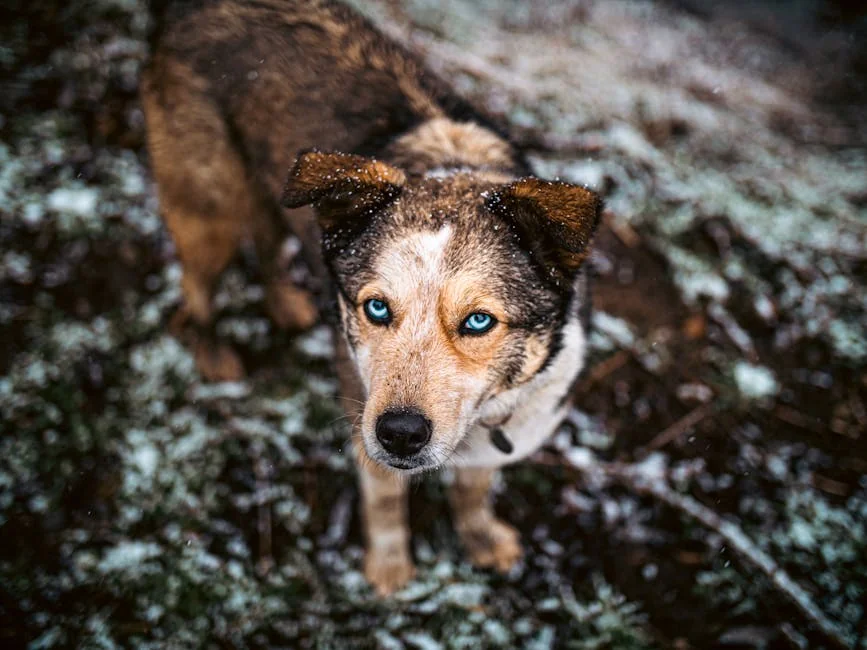
It is common to wonder why your dog stares at you with such intensity throughout the day. By understanding the underlying canine communication signals, you can decipher whether your pup is expressing affection, seeking resources, or signaling a need for your intervention.
The Science of Canine Eye Contact
When your dog stares at you, they are primarily using their eyes to communicate needs and emotions. Because dogs evolved alongside humans, they have developed a unique ability to use eye contact to bridge the species gap.
The Oxytocin Loop
Research suggests that sustained, soft eye contact between you and your dog triggers the release of oxytocin in both of you. Often called the “love hormone,” this chemical creates a bond similar to the one between a human parent and an infant. When your dog looks at you with relaxed eyelids and a soft expression, they are essentially telling you that they feel safe and attached.
Reading the Expression
You can distinguish between affectionate staring and other types by observing the surrounding body language. If your dog’s body is loose, their tail is wagging steadily, and they are leaning into you, they are likely expressing deep affection. If their body is stiff or their mouth is tightly closed, the intent behind the stare changes significantly.
Common Reasons for Persistent Staring
If you notice your dog tracking your every movement, they are likely gathering information to predict your behavior. Consistency is the primary driver of this behavior.
- Predicting Your Next Move: Your dog knows your routine better than you do. They stare at you to see if you are about to pick up a leash, put on your shoes, or walk toward the kitchen. They are scanning for environmental cues that signal an upcoming activity they enjoy.
- A Request for Guidance: If your dog stares while you are mid-training session or navigating a new environment, they are looking to you for direction. They want to know what the “right” behavior is so that they can earn a reward or avoid confusion.
- The “Resource” Stare: When your dog stares while you are eating or preparing food, they are simply waiting for an opportunity. They have learned that your attention—and your hands—are the gateway to food, treats, or toys.
Warning Signs and Problematic Staring
While most staring is harmless, you must be able to recognize when the behavior crosses into unwanted territory. If your dog stares with a “hard” gaze—meaning their eyes are wide, unblinking, and the muscles around their face are tense—you should proceed with caution.
Assessing the Hard Stare
A hard stare is often an indicator of resource guarding or potential aggression. If your dog is guarding a bone, bed, or space, they may stare at you to warn you to stay back. You should never force a dog to hold eye contact if they appear uncomfortable, as this can be perceived as a challenge or a threat.
When to Intervene
If you notice the following behaviors paired with a stare, consider consulting a professional trainer:
- Their body goes completely still and rigid.
- They show the whites of their eyes (often called “whale eye”).
- They stop staring if you look away, but resume the moment you look back.
- They growl or raise their hackles while tracking your movement.
How to Handle Excessive Staring
If your dog’s staring feels intrusive—for example, if they stare at you while you are trying to work or sleep—you have the power to reshape the behavior. Dogs often stare because they have been unintentionally reinforced for doing so.
Start by ignoring the behavior. If you laugh, talk to them, or give them a treat when they stare, you are essentially telling them that staring is a productive way to get your attention. By withholding your attention, you make the behavior less rewarding.
Provide your dog with appropriate outlets for their focus. If they stare because they are bored, introduce mental stimulation games like scent work or puzzle feeders. If they stare for affection, request a specific behavior, such as a “sit,” before you reward them with your attention. This shifts the dynamic from demand-based staring to a cooperative, rewarded interaction.
Ultimately, your dog’s gaze is a tool for connection. When you learn to interpret the context, you strengthen the communication channel between you, turning those moments of staring into a clearer, more predictable relationship.