
Understanding your dog’s emotional world transforms your relationship from simple ownership to a deep, communicative partnership. By learning to read their subtle signals, you can ensure their mental well-being and prevent behavioral issues before they start.
The Science of Canine Feelings
To understand what your dog is feeling, it helps to know their emotional capacity. Leading animal behaviorists often compare a dog’s emotional development to that of a human child aged two to two-and-a-half years old.
This means your dog experiences basic, visceral emotions quite intensely. They feel joy, fear, anger, love, excitement, and distress. Their brains produce oxytocin (the love hormone) when they see you, just as yours does when you see them.
However, dogs generally lack the cognitive complexity required for social emotions that require self-reflection. They likely do not experience:
- Pride
- Shame
- Contempt
- Guilt
Recognizing this limitation is liberating. It stops you from projecting complex human narratives onto your pet and allows you to focus on what they are actually experiencing in the moment.
Decoding the Language of the Body
Since dogs cannot speak, they broadcast their emotional state through body language. To read your dog effectively, you must look at the whole picture—ears, tail, posture, and facial expression—rather than focusing on a single body part.
The Tail is a Barometer, Not a Switch
A common misconception is that a wagging tail always equals a happy dog. This is arguably the most dangerous myth in dog ownership. The tail indicates distinct emotional states based on position and speed:
- Loose and sweeping: This indicates genuine happiness and friendliness. The hips often wiggle along with the tail.
- Stiff and vibrating: A high, stiff tail that is vibrating rather than sweeping signals intense arousal or potential aggression. This dog is on high alert.
- Tucked between legs: This is a clear sign of fear, anxiety, or submission. The dog is trying to make themselves smaller to avoid conflict.
Facial Expressions and Eye Contact
Your dog’s face holds micro-expressions that reveal their internal state.
- Soft Eyes: When a dog is relaxed or affectionate, their eyelids are heavy or relaxed, and they may blink slowly.
- Whale Eye: If your dog turns their head away but keeps their eyes fixed on you (or a threat), exposing the whites of their eyes, they are anxious or guarding something. This is a warning to back off.
- The Mouth: A relaxed, slightly open mouth often indicates a calm dog. If the mouth suddenly snaps shut, the dog has shifted focus and is assessing a potential threat.
Recognizing Key Emotional States
You can become an expert on your dog by categorizing their behaviors into specific emotional buckets.
Joy and Contentment
A happy dog appears “loose.” Their muscles are relaxed, and they may offer a “play bow” (lowering the front of their body while keeping the rear up). This is a universal invitation to play and a sign that any rough-housing that follows is all in good fun.
Fear and Anxiety
Fear is the root of many behavioral problems, including aggression. Signs of anxiety can be subtle. Watch for appeasement signals, which are gestures dogs use to calm themselves or tell a threat “I come in peace.” These include:
- Lip licking when no food is present.
- Excessive yawning when not tired.
- Panting heavily when not hot or exercised.
- Turning the head away to avoid eye contact.
If you see these signs, your dog is uncomfortable. You should intervene to change the environment or remove the stressor.
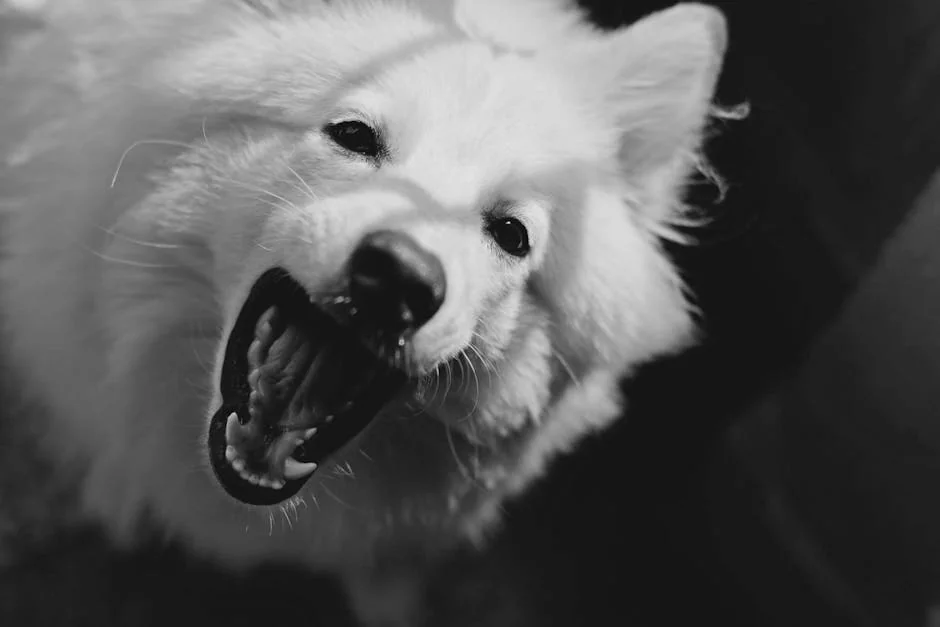
Anger and Aggression
Aggression is usually fear-based, but it can also stem from resource guarding or frustration. Before a dog bites, they almost always give warnings. The body becomes rigid and still (the “freeze”). The ears may pin flat against the head or pitch forward intently. A hard stare is a challenge. If you see a dog freeze, stop what you are doing immediately and give them space.
The Myth of the “Guilty Look”
You come home to find the trash overturned. You look at your dog, and they cower, tuck their tail, and look away. You assume they feel guilty because they know they did something wrong.
This is a human projection. Research shows that the “guilty look” is actually fear.
Your dog reacts to your body language, tone of voice, and the “evidence” on the floor. They have learned that Trash + Angry Owner = Punishment. They are displaying submission to appease you and avoid conflict. Because dogs live in the moment, they do not connect the trash they ate three hours ago with your current anger. Punishing a dog acting “guilty” only increases anxiety and damages your trust.
How to Respond to Your Dog’s Emotions
Your reaction to your dog’s feelings shapes their behavior. When you accurately interpret their emotions, you can respond appropriately.
Validate Fear, Don’t Punish It: If your dog is scared of a stranger or a thunderstorm, comforting them does not “reinforce” the fear. You cannot reinforce an emotion; you can only change how the dog feels about the situation. calm reassurance helps them feel safe.
Respect Their Boundaries: If your dog growls or shows “whale eye” when you hug them, stop immediately. They are communicating that they are uncomfortable. Respecting this warning prevents the dog from feeling the need to escalate to a bite.
Encourage Positive States: When your dog is calm and happy, reward them. Capturing these moments helps your dog learn that a relaxed emotional state brings good things.
By observing your dog without judgment and learning their unique signals, you bridge the species gap. You stop guessing what they feel and start knowing, creating a safer, happier life for both of you.