
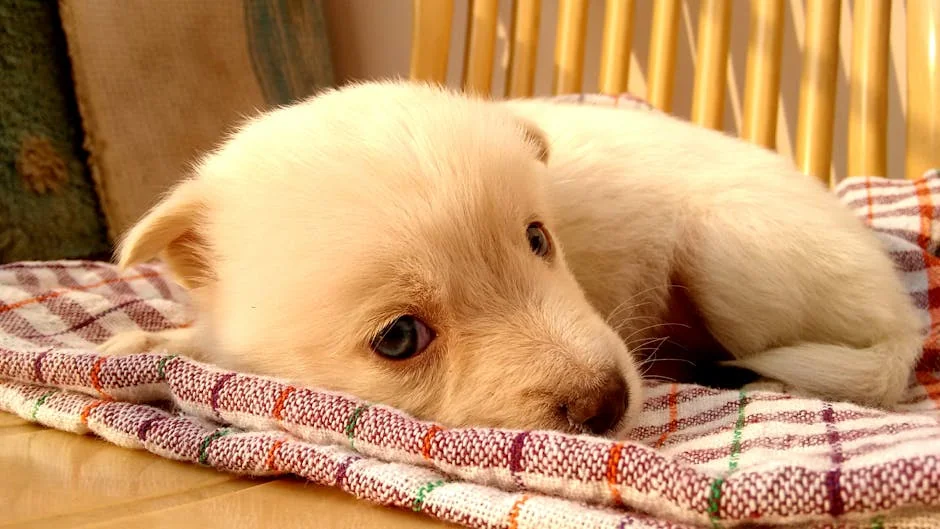
Bringing a new puppy home does not guarantee months of chaos, sleepless nights, and chewed furniture. By implementing structure, prioritizing mental rest, and rewarding relaxation from the very first hour, you can shape a dog that defaults to calmness rather than hyperactivity.
Master the Art of Environmental Management
The fastest way to a calm puppy is to prevent them from practicing chaotic behaviors. If you give a puppy free reign of your home, they will find trouble, run laps, and develop bad habits that are difficult to break. You must control their environment to set them up for success.
Use baby gates, ex-pens, or a crate to create a “success zone.” This area should be puppy-proofed and boring enough that the puppy isn’t constantly overstimulated. By limiting their world, you limit their options. When a puppy has fewer choices, they are more likely to choose sleep or quiet chewing over destruction.
Restrict access to high-energy areas of the house until the puppy has earned freedom through calm behavior. Your puppy should only be outside their confinement area when you are actively supervising, training, or playing with them.
Implement Enforced Naps
Many owners mistake a “wild” puppy for an energetic one, assuming the dog needs more exercise. In reality, frantic behavior like biting, zooming, and barking is usually a sign of an overtired puppy. Puppies are like toddlers; they rarely regulate their own sleep and will fight fatigue with adrenaline.
You need to schedule their sleep. A generally effective routine for puppies under six months old is the “one hour up, two hours down” rule.
- One Hour Awake: Potty, training, play, eating.
- Two Hours Asleep: The puppy goes into their crate or pen for a nap.
If your puppy creates a fuss, cover the crate or remove distractions. Once they fall into this rhythm, their overall arousal levels will drop significantly because their brain is getting the rest it needs to process the day.
Recognizing the Overtired Signals
Learn to spot when your puppy has crossed the threshold from “awake” to “overtired.” Look for:
- Uncontrollable biting or “shark attacks”
- Inability to focus on commands they know
- The “zoomies” (frantic running in circles)
- Excessive vocalization
When you see these signs, stop trying to train or play. Immediately put the puppy down for a nap.
Teach the “Capture Calm” Technique
Most people train their dogs to do things—sit, stay, heel. You must also train your dog to do nothing. This is often called “capturing calm,” a concept popularized by trainer Kikopup.
Keep a portion of your puppy’s daily kibble in your pocket or a treat jar on a nearby shelf. Go about your day—watch TV, work at your desk, or read. Ignore the puppy. Eventually, the puppy will get bored and settle down on their bed or the floor.
How to execute the reward:
The moment the puppy lies down and relaxes their head:
- Quietly walk over.
- Place a piece of food between their paws.
- Do not say anything.
If you say “Good boy!” in a happy voice, the puppy will likely jump up, breaking the calm state. You want to reinforce the emotion of relaxation, not just the physical position of lying down. If you do this consistently, your puppy learns that lying quietly is a lucrative job.
Prioritize Mental Stimulation Over Physical Exercise
While physical exercise is necessary, it builds stamina. If you only focus on running your puppy to tire them out, you will eventually have a super-athlete who requires miles of running to settle down.
Mental stimulation tires a puppy out faster and encourages a calmer state of mind. Licking and chewing, in particular, release endorphins that naturally soothe dogs.
- Ditch the bowl: Feed meals exclusively through puzzle toys, snuffle mats, or slow feeders.
- Chew training: Provide age-appropriate chews (bully sticks, frozen carrots, rubber toys). When the puppy is chewing, they are stationary and focused.
- Scent games: Hide treats around a small area and let the puppy sniff them out. Ten minutes of sniffing is roughly equivalent to an hour of walking in terms of energy expenditure.
Practice Neutral Socialization
A common mistake is thinking socialization means letting your puppy meet every person and dog they see. This teaches the puppy that seeing another living being equals high excitement and interaction. This leads to a dog that pulls on the leash and jumps on strangers.
True socialization is teaching your puppy that the world is normal and doesn’t require a reaction.
Take your puppy to a park, sit on a bench, and keep them on a leash. Let them watch the world go by. If a person walks past and your puppy looks but stays seated, reward them. If a dog passes and your puppy remains calm, reward them.
You are teaching them to be a neutral observer. You want your puppy to think, “Oh, that’s just a person, no big deal,” rather than, “A person! I must say hi!”
Regulate Your Own Energy
Puppies mirror their owners. if you use a high-pitched, excited squeaky voice constantly, you are ramping up your puppy’s arousal levels.
To raise a calm puppy, you must embody calmness. Use a slow, low, and steady tone of voice. When the puppy jumps on you, do not shout “No!” or push them off, as this can be interpreted as wrestling. Instead, turn your back and withdraw attention until all four paws are on the floor.
By keeping your energy grounded, managing the environment to prevent mistakes, and heavily reinforcing the moments when your puppy chooses to do nothing, you build a lifestyle where calmness is the default setting.