
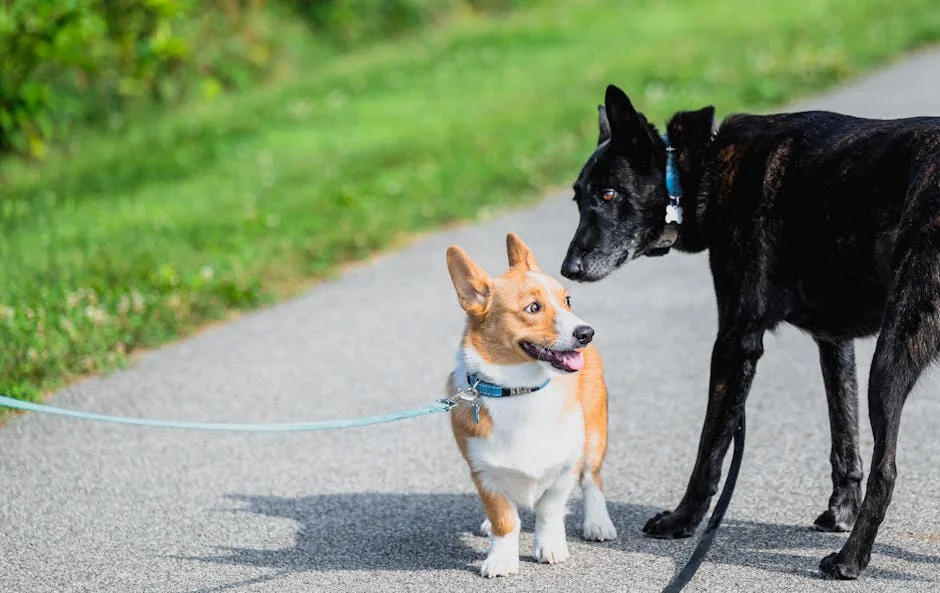
Dogs talk to us constantly, but they rely on a silent language of posture, facial expressions, and vocal tones rather than words. Learning to decode these signals prevents misunderstandings, reduces bite risks, and deepens the bond you share with your pet.
By observing specific physical cues and the context in which they happen, you can determine if your dog is trying to tell you something important about their emotional state, health, or intentions.
The Myth of the Wagging Tail
One of the most dangerous misconceptions about canine body language is that a wagging tail essentially means a happy dog. While it can mean happiness, the tail is actually a general barometer of emotional arousal. To understand what the tail is saying, you must look at height, stiffness, and speed.
Tail Height and Stiffness
A tail held high and stiff, waving slowly back and forth like a metronome, does not indicate friendliness. It signals alertness, dominance, and potential aggression. If you see a dog with a high, rigid vibrating tail, give them space.
Conversely, a tail tucked between the legs is a clear sign of fear and submission. The dog is trying to make themselves smaller to avoid conflict. If the tail is in a neutral middle position and sweeping in wide, loose circles (sometimes moving the dog’s whole rear end), this is the classic “happy” wag you are looking for.
Direction Matters
Research suggests that dogs tend to wag more to the right when they see something positive (like their owner) and to the left when they encounter something negative or concerning (like a dominant unfamiliar dog). While subtle, this directional bias gives you a glimpse into the hemispheres of their brain reacting to stimuli.
Reading Facial Expressions
Your dog’s face is incredibly expressive, but humans often misinterpret signs of stress as signs of guilt or affection. Pay close attention to the eyes and mouth.
The Truth About Eye Contact
In the canine world, direct, prolonged eye contact is often a threat. If a dog stares at you with a hard, unblinking gaze and a stiff body, they are guarding a resource or asking you to back off.
However, a “soft” gaze—where the eyes are relaxed, the lids look slightly heavy, and the dog blinks naturally—indicates trust and affection.
Watch out for the “whale eye.” This occurs when a dog turns their head away but keeps their eyes fixed on you (or a threat), exposing the whites of their eyes (the sclera). This is a major red flag indicating high anxiety or fear. If you see whale eye, stop what you are doing immediately and remove the stressor.
Yawning and Lip Licking
If your dog yawns while you are hugging them or training them, they are likely not tired. In a tense context, yawning is an “appeasement signal.” It is a way for your dog to say, “I am stressed, and I am trying to calm myself down.”
Similarly, quick flicks of the tongue over the nose (lip licking) when no food is present are distinct signs of discomfort. If you are scolding a dog and they lick their lips or yawn, they aren’t ignoring you; they are signaling that they feel threatened and want the conflict to end.
Interpreting Ear Position
Ears act as directional antennas for sound, but they act as semaphores for emotion. The shape of your dog’s ears (floppy vs. pointy) matters, but the base movement remains similar involves.
- Ears Pricked Forward: The dog is alert, interested, and focused. They are gathering information.
- Ears Relaxed/Neutral: The dog is calm and content.
- Ears Pinned Back: If the ears are plastered tight against the head, the dog is fearful or acting submissive.
- Ears Spreading Sideways: In some breeds, “airplane ears” that jut out to the sides can indicate conflicting emotions or confusion.
Vocalizations: It’s Not Just Barking
When your dog is trying to tell you something verbally, the pitch and duration of the sound dictate the meaning.
Decoding Growls
Never punish a growl. A growl is a warning system; it is your dog telling you they are uncomfortable before they resort to biting. If you punish the growl, a dog may learn to bite without warning next time.
However, not all growls are aggressive. “Play growling” is common during tug-of-war. You can distinguish this by looking at the rest of the body: if the body is loose and bouncing, the growl is part of the game. If the body is stiff and the growl is low and rumbling, it is a threat.
Whining and Barking
High-pitched barking usually signals excitement or an invitation to play. Low-pitched, guttural barking signals a threat or protection.
Whining can be tricky. It often means “I want something” (attention, food, to go outside), but it can also indicate physical pain. If your dog whines while lying down or hesitates to move, consult a veterinarian to rule out injury.
Body Posture and The “Whole Dog” Approach
You cannot read a single body part in isolation. You must look at the entire dog to get an accurate translation.
The Play Bow
If a dog lowers their front elbows to the ground while keeping their rear end in the air, this is the universal “play bow.” It serves as a meta-signal that says, “Everything I do after this is just for fun.” Even if they growl or nip shortly after, the play bow confirms it is a game.
Rolling Over
A dog exposing their belly is not always asking for a rub. If the dog is tense, with ears back and tail tucked, rolling over is a gesture of extreme submission. They are saying, “I am not a threat, please don’t hurt me.” Petting them in this state may terrify them further. Conversely, if the dog is loose, wiggly, and has a goofy open mouth, they are genuinely asking for affection.
Piloerection (Raised Hackles)
When the hair along a dog’s spine stands up, it is called piloerection. This is an involuntary response, similar to goosebumps in humans. It indicates arousal, not necessarily aggression. A dog might have raised hackles because they are angry, but also because they are surprised, excited, or insecure. Look at the tail and face to determine if the arousal is positive or negative.