
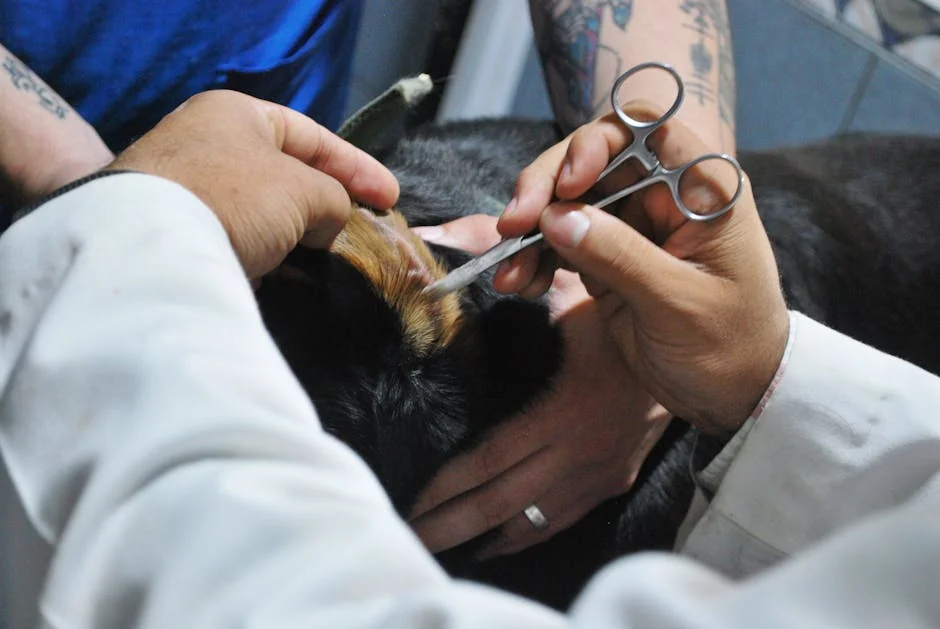
Regular ear maintenance is one of the most effective ways to prevent painful ear infections and save money on veterinary bills. Learning how to clean your dog’s ears at home allows you to monitor their health closely and address minor debris before it becomes a major problem.
Knowing When to Clean (and When Not To)
Before you begin, you must determine if your dog actually needs a cleaning. Over-cleaning can strip the ear of natural healthy waxes and lead to irritation. A healthy ear is pink, odorless, and not dirty.
You should clean your dog’s ears if you notice a mild buildup of wax or dirt, or if you simply want to maintain hygiene after a bath or swim.
Signs of Infection vs. Dirty Ears
If the ear looks inflamed, red, or painful to the touch, do not attempt to clean it yourself. Cleaning an infected ear can be incredibly painful for the dog and may worsen the condition.
Stop immediately and consult a veterinarian if you see:
- Redness or swelling in the ear canal.
- A strong, yeasty, or foul odor.
- Discharge that is yellow, green, or bloody.
- Your dog scratching excessively or shaking their head constantly.
- Signs of pain, such as whimpering when the ears are touched.
Gathering the Right Supplies
Successful ear cleaning relies on having the proper tools ready before you call your dog over. Fumbling for supplies while holding a squirming dog increases stress for both of you.
You will need:
- A Veterinarian-Approved Ear Cleaning Solution: Avoid generic cleaners. Look for a solution specifically designed for dogs, often containing drying agents (like salicylic acid) or antifungals if recommended by your vet.
- Cotton Balls or Gauze Squares: These are used to wipe out the discharge.
- A Towel: Things will get messy when your dog shakes their head.
- High-Value Treats: Essential for creating a positive association with the process.
What to Avoid
Never use household products unless explicitly directed by a vet. Hydrogen peroxide can damage healthy tissue and slow healing. Rubbing alcohol stings intensely and causes irritation. Vinegar mixtures can disrupt the pH balance of the ear if mixed incorrectly.
Most importantly: Do not use cotton swabs (Q-tips). A dog’s ear canal is L-shaped. Inserting a pointed object like a Q-tip pushes wax and debris further down into the horizontal canal, impacting it against the eardrum. It also poses a severe risk of rupturing the eardrum if your dog jerks their head.
Step-by-Step Cleaning Process
Choose a location that is easy to clean, such as a bathroom, laundry room, or outdoors. If your dog is nervous, having a second person to help gently restrain them or offer treats is highly beneficial.
1. Position Your Dog
Sit the dog in front of you or back them into a corner so they cannot back away. If you have a small dog, place them on a table or counter with a non-slip mat. Lift the ear flap (the pinna) vertically to expose the ear canal and straighten out the L-shape slightly.
2. Apply the Solution
While holding the ear flap up, gently squeeze the cleaning solution into the ear canal. Do not be shy with the amount; fill the canal until you can see the liquid rising near the opening.
Crucial tip: Do not let the tip of the bottle touch the ear itself. If the ear is infected, the bacteria or yeast can contaminate the bottle tip and spread infection to the other ear or reinfect the dog later.
3. Massage the Base of the Ear
Still holding the ear flap up, use your other hand to massage the base of the ear (below the ear opening). You should hear a squishing or “squelching” sound.
Massage for approximately 20 to 30 seconds. This mechanical action helps break up debris and wax stuck deep inside the horizontal canal, allowing the fluid to lift it away from the eardrum.
4. Let Your Dog Shake
Step back and release the ear. Your dog will naturally want to shake their head vigorously. Let them do this. The centrifugal force moves the dissolved wax and fluid from the deep canal to the outer ear, where you can easily reach it.
5. Wipe Away Debris
Take a cotton ball or a piece of gauze wrapped around your finger. Gently wipe the inner side of the ear flap and the opening of the ear canal. You can go as far as your finger fits comfortably, but never force it.
Repeat the wiping process until the cotton ball comes away clean. If the ear is very dirty, you may need to repeat the liquid application and massage steps.
Post-Cleaning Care
Once the cleaning is finished, praise your dog enthusiastically and provide a high-value treat. This positive reinforcement teaches them that ear cleaning results in a reward, making future sessions easier.
If you notice the ear area stays wet, gently dry the fur around the ear and the ear flap with a dry towel. Excess moisture can contribute to bacterial growth, especially in dogs with long, floppy ears (like Cocker Spaniels or Basset Hounds).
How Often Should You Clean Your Dog’s Ears?
Frequency depends largely on your dog’s breed, lifestyle, and ear anatomy.
- Floppy-Eared Dogs: Breeds with long ears are more prone to infections because air does not circulate well in the canal. They may require weekly cleaning.
- Swimmers: Dogs that swim frequently should have their ears cleaned or at least dried with a drying solution after every swim to prevent “swimmer’s ear.”
- Prick-Eared Dogs: Breeds like German Shepherds or Huskies have better airflow and may only need monthly cleanings or spot checks.
Monitor your dog’s ears weekly. If they look clean and smell fine, leave them alone to preserve the natural flora. Over-maintenance can cause as many issues as neglect. By sticking to this routine and using the right technique, you ensure your dog remains comfortable and hearing clearly.