
Walking your dog should be a relaxing bonding experience, not a battle of strength that leaves your shoulder aching and your patience frayed. By shifting your approach from correcting bad behavior to reinforcing the correct position, you can teach even the most enthusiastic dog to walk politely with a loose leash.
Understanding Why Your Dog Pulls
Before you can stop leash pulling, you must understand why it happens. Dogs do not pull to confuse or annoy you; they pull because it works. If pulling gets them to the fire hydrant or the tree faster, the behavior is rewarded by the environment.
Furthermore, dogs possess a natural instinct called the opposition reflex. When they feel pressure against their chest or neck, their biological response is to push against it. If you pull back on the leash, your dog will instinctively pull harder in the opposite direction. Your goal is to eliminate that tension entirely so the reflex is never triggered.
The Right Equipment for Training
Your choice of gear sets the stage for success. Standard back-clip harnesses and flat collars often encourage pulling because they allow the dog to use their full body weight against you.
Stick to a Fixed-Length Leash
Ditch the retractable leash immediately. Retractable leashes maintain constant, slight tension on the dog’s collar, effectively teaching them that pulling is necessary to move forward. Switch to a standard 4-to-6-foot leather or nylon leash. This gives you better control and provides clear tactile feedback to the dog when they reach the end of the line.
Use a Front-Clip Harness
Invest in a harness with a leash attachment point on the dog’s chest (the front). When a dog pulls on a front-clip harness, the tension naturally steers their body sideways toward you rather than allowing them to forge ahead. This mechanical disadvantage makes pulling ineffective and uncomfortable for the dog without causing pain.
The Core Technique: “Be a Tree”
This is the most fundamental rule of loose leash walking: Forward motion stops the moment the leash goes tight.
- Start walking. As soon as you feel tension on the leash, stop immediately.
- Stand still. Do not yank the leash or pull the dog back. anchor your hand to your waist and wait.
- Wait for the slack. Your dog may continue pulling for a moment. Wait until they stop, back up, or turn to look at you, creating slack in the leash.
- Mark and move. As soon as the leash is loose, say “Yes!” or “Good!” and immediately begin walking forward again.
If you are consistent, your dog learns a simple equation: A loose leash enables movement; a tight leash disables movement.
The “Reinforcement Zone” Strategy
Stopping the pulling is only half the battle; you must also teach your dog where you want them to be. Professional trainers call the area directly next to your leg the Reinforcement Zone.
Load a treat pouch with high-value rewards (cheese, hot dogs, or freeze-dried liver). Start walking in a low-distraction environment, such as your hallway or backyard. Every few steps, strictly when the dog is by your side and the leash is loose, deliver a treat right at the seam of your pants leg.
You are not bribing the dog to come back to you; you are rewarding the dog for maintaining the correct position while moving. Initially, you may need to reward every 2 or 3 steps. As the dog begins to understand that the “money zone” is right next to your leg, you can gradually increase the number of steps between rewards.
The U-Turn Method for Heavy Pullers
Some dogs are too over-aroused for the “Be a Tree” method to work immediately. If your dog pulls hard and ignores your stop, use the U-Turn method (also known as “Penalty Yards”).
When the dog rushes ahead to pull, say nothing. Simply turn 180 degrees and walk briskly in the opposite direction. The dog will hit the end of the leash and be forced to turn and catch up to you.
When the dog catches up and is walking by your side again, click or praise (“Yes!”) and offer a treat in the Reinforcement Zone. This teaches the dog that if they leave your orbit, they actually get further away from their destination. They must check in with you to keep moving toward their goal.
Increasing Difficulty Gradually
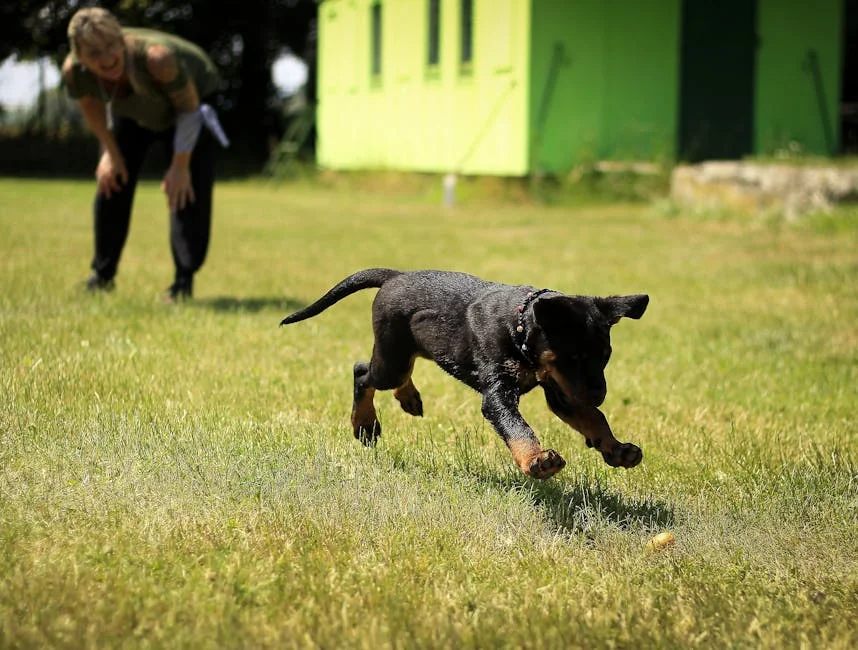
A common mistake is expecting a dog to perform perfect loose leash walking in a high-distraction environment immediately. If your dog cannot walk politely inside your living room, they will fail at the park where there are squirrels, other dogs, and new smells.
Follow this hierarchy of difficulty:
- Indoors: Hallways and large rooms with zero distractions.
- Backyard: Familiar territory with mild outdoor smells.
- Quiet Street: The sidewalk in front of your house during quiet hours.
- Busy Areas: Parks and pet stores.
If your dog starts pulling relentlessly, you have moved to a difficult environment too quickly. Go back a step and reinforce the basics.
Troubleshooting Common Mistakes

If you aren’t seeing results, check your own behavior for these common errors:
- Inconsistency: You cannot let the dog pull “just this once” because you are in a rush. If pulling works 10% of the time, the dog will continue to try it 100% of the time. This is called variable reinforcement, and it makes the behavior harder to extinguish.
- Holding the Leash Too Short: Owners often choke up on the leash to control the dog, creating constant tension. Give the dog the full length of the leash so they have the opportunity to make a choice. They cannot learn to keep the leash loose if you never give them enough slack to experiment.
- High Arms: Keep your arm relaxed and straight down by your side. If you hold your arm up high like you are holding a purse, you create tension on the line and fatigue for yourself.
Stopping leash pulling requires patience and precise timing. By removing the reward of forward movement when they pull and heavily reinforcing them for walking by your side, you will reshape your dog’s understanding of the walk.